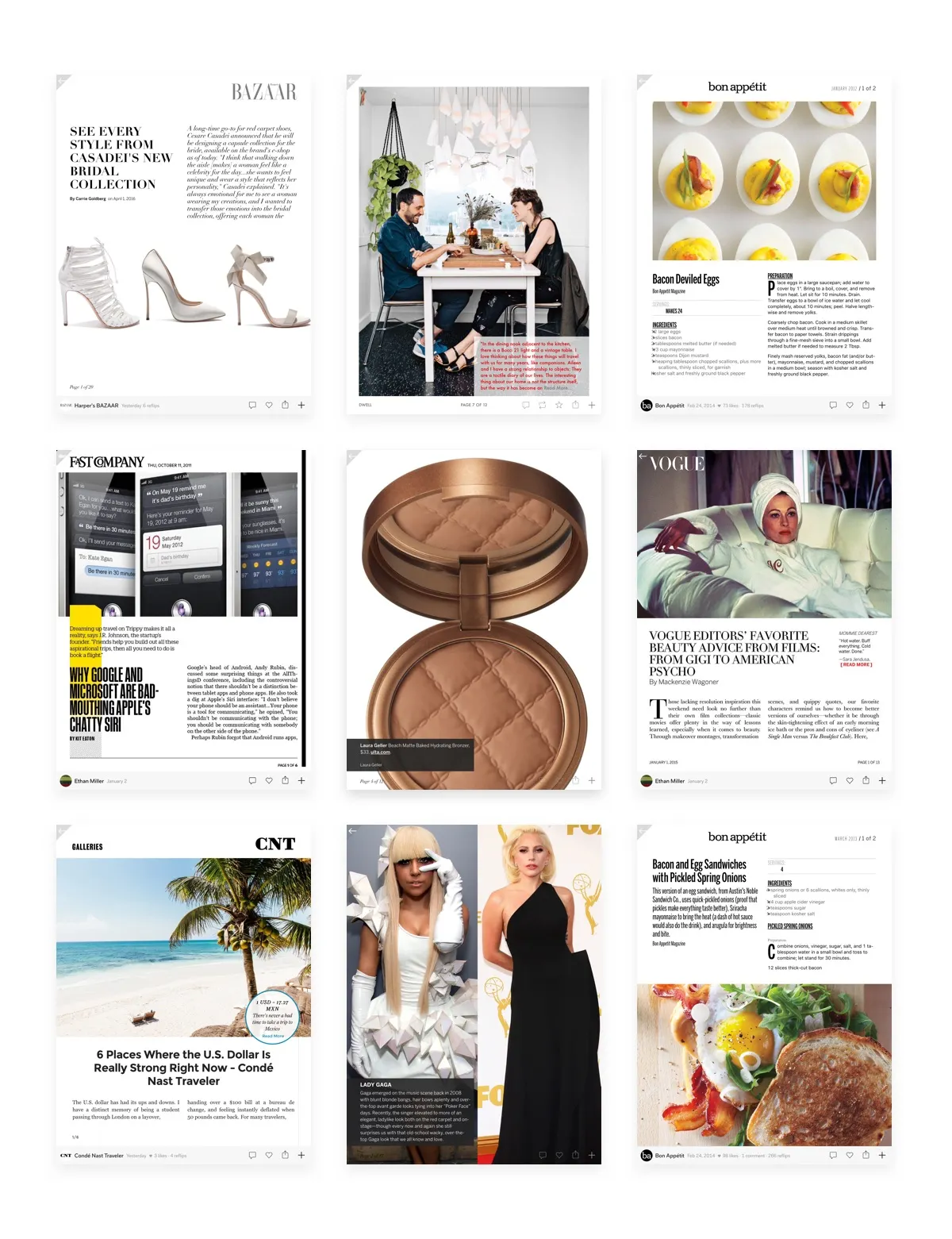
Flipboard Pages
A layout engine that takes articles from the web and sets them like print, with only the story left on the page.
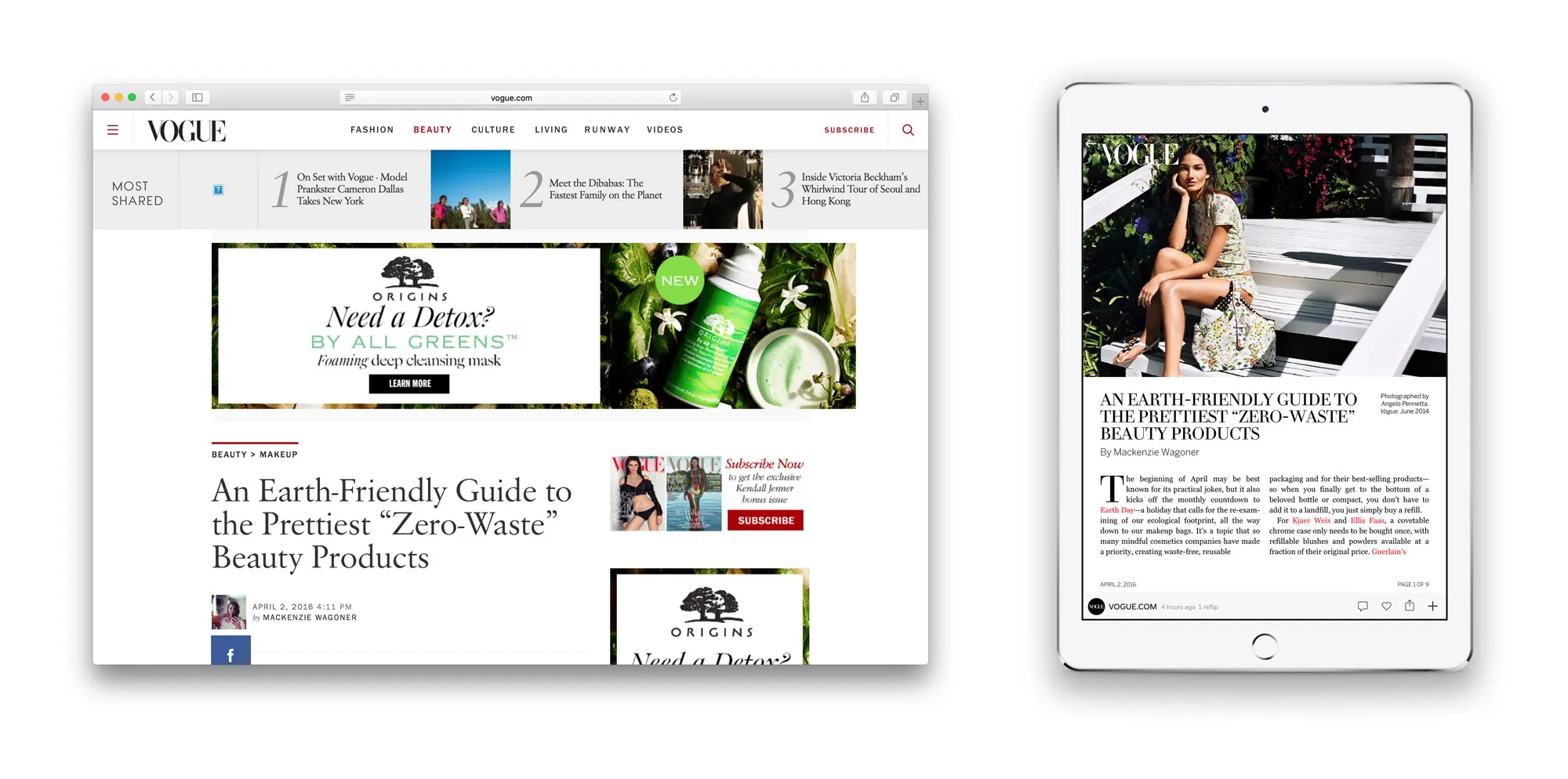
The economics of journalism on the web had pushed publishers' article pages to fill up with banner ads, share buttons and navigation, until the story itself was hard to read. Phones and tablets offered a chance to try another path: with a different advertising model, could we bring back the beauty of print? Flipboard Pages kept only the story and laid it out again with the care of a printed magazine. The approach later became standard for news readers, from Facebook Instant Articles and Google AMP to Apple News.
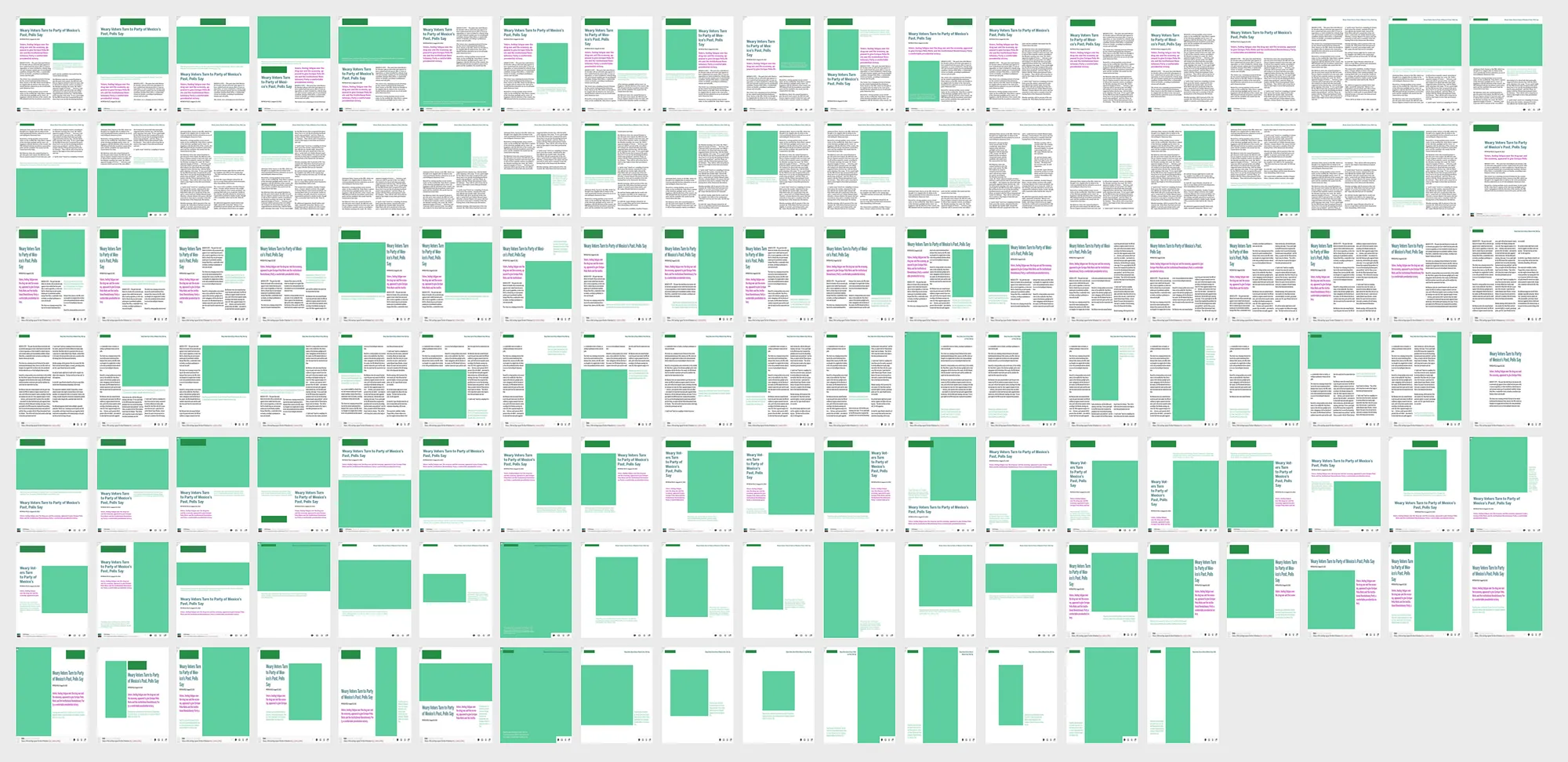
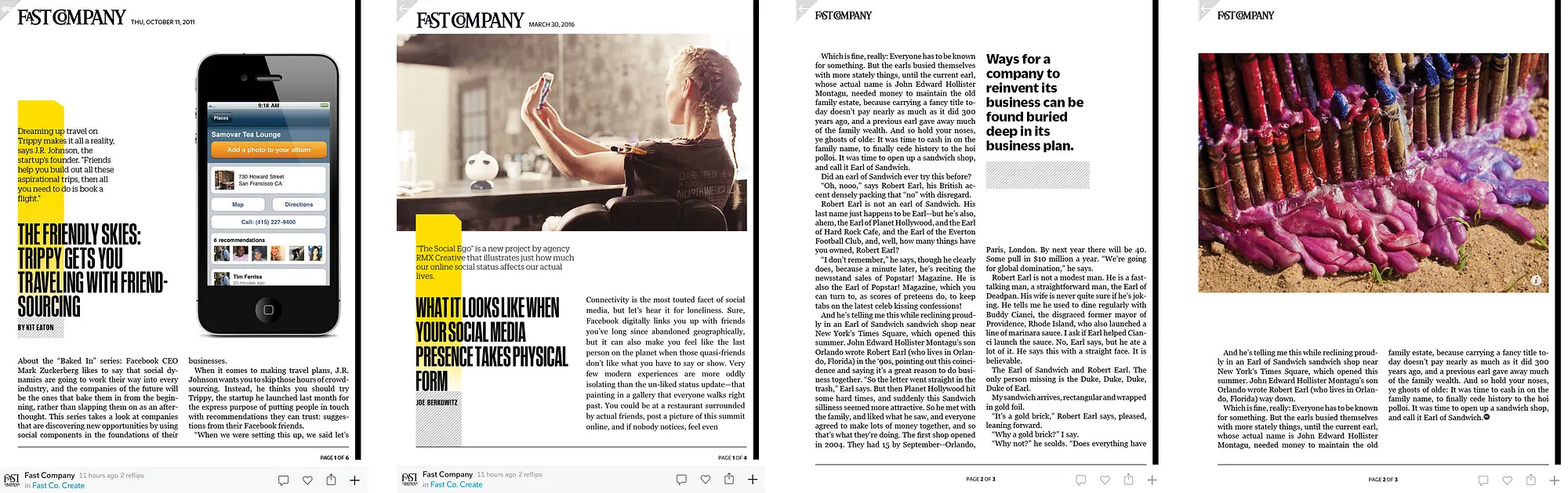
With engineer Charles Ying, I designed the layout process and a flexible template system. The engine scrapes a publisher's pages, works out what matters, and picks a template, mostly by image size and aspect ratio. My part was to turn a print designer's judgement into rules: when to bleed an image or crop it, how to pace a story, what a caption is worth against a crop, how to avoid widows and orphans. I designed the templates, Charles built the engine, and we tested both against a wide range of live articles and iterated. The hard cases were web-native: moving images out of the text without breaking the story, captions that run for paragraphs, inline galleries, and text that was never formatted cleanly.